Medical cannabis is legal in Thailand — and since 26 June 2025, it is the only legal route to cannabis flower. The flower is classified as a controlled herb (สมุนไพรควบคุม), and every purchase requires a PT 33 prescription (ใบสั่งยา ปท. 33) from a licensed practitioner. Within that framework, Thailand still runs one of the most accessible medical cannabis programs in Asia: walk-in clinics, same-day prescriptions, and government-subsidized products.
Whether you are a Thai national exploring cannabis as a treatment option, a tourist seeking legal access, or an expat managing a chronic condition, this guide covers everything you need to know about accessing medical cannabis in Thailand.
Is Medical Cannabis Legal in Thailand in 2026?
Yes. Medical cannabis is fully legal in Thailand, and since 26 June 2025 medical use is the only legal use. On that date, a ministerial notification signed by then-Public Health Minister Somsak Thepsuthin took effect on publication in the Royal Gazette, reclassifying cannabis flower as a controlled herb under the Protection and Promotion of Thai Traditional Medicine Knowledge Act B.E. 2542 (1999).
Three points define how the legality actually works:
1. Cannabis flower is a controlled herb, not a narcotic. The flower was never returned to the Category 5 narcotics list. It is regulated under the Traditional Medicine Act and administered by the Department of Thai Traditional and Alternative Medicine (DTAM) — a lighter regime than narcotics law, but one that still criminalizes unlicensed sale. Cannabis and hemp extracts above 0.2% THC are a different regime entirely: they remain Category 5 narcotics, and a ministerial regulation effective 26 April 2026 limits them to exactly four permitted purposes — medical, research, industrial, and official narcotics-suppression use.
2. The PT 33 prescription is the legal gateway. You can legally buy and possess cannabis flower only with a valid PT 33 form. The penalties sit on the supply side: selling cannabis without a prescription exposes the seller to up to 1 year imprisonment and/or a 20,000 THB fine under the Traditional Medicine Act. Smoking in public is a separate offense — fines up to 25,000 THB and/or up to 3 months imprisonment for creating a public nuisance under the Public Health Act B.E. 2535 (1992). The full application process is covered step by step in our PT 33 prescription guide.
3. CBD under 0.2% THC needs no prescription. CBD products at or below the 0.2% THC threshold are sold at pharmacies and wellness shops without any paperwork. Their legality depends on the product’s Thai FDA registration category (food, cosmetic, or herbal product) and its labeling rules — not on THC content alone.
The framework is still moving. The draft Cannabis and Hemp Act — Thailand’s would-be first dedicated cannabis statute — went through public consultation from 22 April to 21 May 2026 but has not passed parliament as of July 2026. Until it does, ministerial regulations govern. Our Thailand cannabis laws guide tracks every change.
Medical Dispensaries in Thailand: What Replaced the Weed Shops
If you are searching for a medical weed dispensary in Thailand, the honest answer is that the category no longer exists in the form it did in 2023. Medical cannabis treatment now happens in four kinds of venue: specialized cannabis clinics, government hospitals with cannabis or traditional-medicine departments, private hospitals, and licensed traditional-medicine practices. Since January 2026, every licensed outlet must have a DTAM-trained practitioner physically on-site throughout its opening hours — no exceptions.
The venue landscape is consolidating fast. Of 18,433 shops that once operated nationwide, 7,297 had closed by February 2026 after failing to renew under the tighter rules. In April 2026, the Ministry of Public Health announced that the roughly 11,000 remaining licensed cannabis shops must convert into regulated medical establishments — clinics, pharmacies, or traditional-medicine pharmacies — over a three-year transition aligned with license expiry. Officials project that only about 3,000 outlets will complete the conversion.
For patients, the practical effect is simple. The counter you buy from is now attached to a prescriber, the product is dispensed against a PT 33 rather than chosen off a menu, and the outlet carries a license-status identification sticker you can check at the door. Find a licensed provider in our verified clinic directory.
Where to Get Medical Cannabis by City
Licensed clinics operate in every region, with the deepest coverage in Bangkok, and workable options in Chiang Mai, Phuket, Pattaya, Koh Samui, Hua Hin, and Krabi. The rules are national — a PT 33 issued anywhere in Thailand is valid everywhere in Thailand — so the only thing that changes city to city is how many licensed clinics you can choose between and how likely they are to have English-speaking staff.
If you are starting in the capital, our guide to buying medical-grade cannabis in Bangkok covers districts, clinic types, and Bangkok pricing in detail.
How Thailand’s Medical Cannabis System Works
The Medical Framework (Since June 2025)
Thailand’s cannabis system operates under a medical framework following the June 2025 reclassification of cannabis flower as a “controlled herb.” For full legal details, see our Cannabis Laws Thailand 2026 guide.
The core principle is simple:
- See a practitioner → Get evaluated for a qualifying condition
- Receive a PT 33 prescription → The official cannabis prescription form
- Purchase products → From a licensed dispensary or hospital pharmacy
- Use as directed → Follow your practitioner’s dosage guidance
This system ensures medical oversight while making cannabis accessible to those who need it.
Who Can Prescribe Medical Cannabis
Seven types of licensed practitioners can issue PT 33 prescriptions for people in Thailand:
| Practitioner Type | Thai Title | Common Setting |
|---|---|---|
| Physicians | แพทย์ | Hospitals, private clinics |
| Thai Traditional Medicine practitioners | แพทย์แผนไทย | TTM clinics, government hospitals |
| Applied Thai Traditional Medicine practitioners | แพทย์แผนไทยประยุกต์ | Clinics, hospitals |
| Traditional Chinese Medicine practitioners | แพทย์แผนจีน | TCM clinics |
| Pharmacists | เภสัชกร | Pharmacies, dispensaries |
| Dentists | ทันตแพทย์ | Dental clinics |
| Licensed folk healers | หมอพื้นบ้าน | Registered folk-medicine practices |
All prescribers must have completed DTAM-certified cannabis medicine training (the exact course requirements are set by DTAM — confirm current requirements with the department).
Veterinarians (สัตวแพทย์) may authorize cannabis for animals only, under separate veterinary rules; they are not part of the human PT 33 prescriber list above. The exact list of authorized professions is set by ministerial notification, so confirm it against current DTAM guidance.
Step-by-Step: Getting Medical Cannabis
Step 1: Find a Clinic
Locate a licensed cannabis clinic near you. Options include:
- Cannabis clinics — Specialized clinics offering cannabis consultations. Browse our clinic directory
- Government hospitals — Most provincial hospitals now have cannabis medicine or TTM clinics
- Private hospitals — Many private hospitals offer cannabis consultations
- Traditional Thai medicine clinics — Licensed TTM practitioners can prescribe
Tourist-area clinics typically offer walk-in service and multilingual staff. Search by location in our clinic directory.
Step 2: The Consultation
What to bring:
- Thai ID card (Thai nationals) or passport (foreigners)
- Medical records or documentation of your condition (if available)
- List of current medications
- Gold Card / health insurance card (Thai nationals)
What happens during the consultation:
- Registration — Provide ID, fill out medical history form
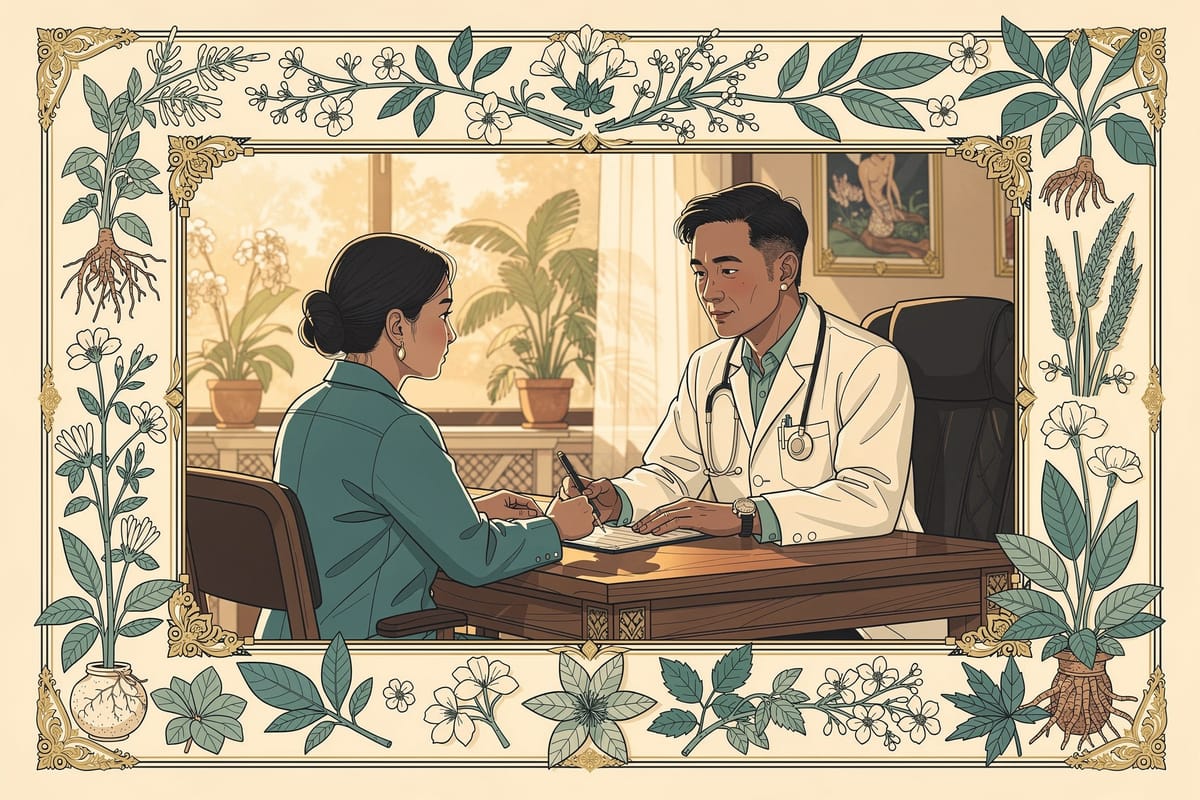
- Assessment — Practitioner reviews your condition, symptoms, and medical history
- Discussion — Practitioner explains cannabis treatment options, expected benefits, and potential side effects
- Prescription — If appropriate, practitioner issues a PT 33 form specifying product type, dosage, and quantity
- Product selection — At clinics with on-site dispensaries, you can purchase immediately
Duration: 15-60 minutes depending on the clinic and complexity of your condition
Cost: 300-800 THB at most clinics (free at government hospitals for Gold Card holders)
Step 3: The PT 33 Prescription
The PT 33 form (ใบสั่งยา ปท. 33) is your legal authorization to purchase and possess medical cannabis in Thailand.
Key details:
- Valid for up to 30 days from date of issue
- Maximum quantity: a commonly reported cap of around 30 grams per month of dried flower (or equivalent in other product forms)
- Cannot be refilled — purchases are recorded against the form during its 30-day validity, and a new prescription requires a follow-up consultation
- Can be filled at any licensed dispensary (not just the issuing clinic)
- Must be presented at time of purchase
- Keep your PT 33 with you when in possession of cannabis products
- Valid throughout Thailand — a prescription issued in Bangkok works in Phuket
Step 4: Purchase Products
With your PT 33 prescription, purchase medical cannabis from:
- The clinic’s dispensary — Most convenient, immediate access
- Any licensed dispensary or converted clinic — Your PT 33 works nationwide, not just at the issuing clinic
- Government hospital pharmacy — For GPO products (cheapest option)
Medical Cannabis Products Available
Cannabis Oil
The most commonly prescribed medical cannabis product. Available in:
- GPO formulas — Government-produced, standardized, affordable (100-500 THB)
- Full-spectrum oils — Private brands with varying CBD:THC ratios (800-3,000 THB)
- CBD-dominant oils — For conditions where THC is not desired (500-2,500 THB)
- THC-dominant oils — For pain, nausea, insomnia (800-3,000 THB)
For comprehensive information, see our Cannabis Oil Thailand Guide.
Dried Flower
Cannabis flower purchased with a PT 33 prescription for vaporization or preparation:
- Various strains including Thai Sativa, Thai Stick, and modern hybrids
- Price range: 300-800 THB per gram depending on strain and quality
- Available at licensed dispensaries
Traditional Thai Medicine Preparations
Thailand’s unique offering — cannabis formulated with traditional Thai herbs. The Department of Thai Traditional and Alternative Medicine (DTAM) has officially recognized 16 traditional cannabis formulas (ตำรับยากัญชา 16 ตำรับ), drawn from a historical archive of 162 formulas documented in ancient Thai pharmacopoeia.
The 16 Official Traditional Cannabis Formulas
| # | Thai Name | Conditions Treated |
|---|---|---|
| 1 | ยาอัคคินีวคณะ | Appetite stimulation, digestive fire, nourishment |
| 2 | ยาศุขไสยาศน์ | Insomnia, sleep disorders, restlessness |
| 3 | ยาทำลายพระสุเมรุ | Severe body pain, musculoskeletal conditions |
| 4 | ยาทัพยาธิคุณ | General pain, inflammatory conditions |
| 5 | ยาน้ำมันสนั่นไตรภพ | Joint pain, arthritis, topical application |
| 6 | ยาแก้ลมเนาวนารีวาโย | Wind element imbalance in women (gynecological) |
| 7 | ยาแก้สัณฑฆาต กล่อนแห้ง | Urinary and reproductive conditions |
| 8 | ยาแก้ลมขึ้นเบื้องสูง | Upper body wind element, headaches, dizziness |
| 9 | ยาไฟอาวุธ | Inflammatory conditions, fever, infections |
| 10 | ยาแก้นอนไม่หลับ/ยาแก้ไข้ผีเข้า | Insomnia, anxiety, spirit-related afflictions |
| 11 | ยาแก้ลมแก้เส้น | Tendon and nerve pain, numbness, tingling |
| 12 | ยาอัมฤตโอสถ | General tonic, rejuvenation, immune support |
| 13 | ยาแก้โรคจิต | Mental health conditions, psychosis support |
| 14 | ยาริดสีดวงมหากาฬ | Hemorrhoids, rectal conditions |
| 15 | ยาอไภยสาลี | Digestive disorders, gastric conditions |
| 16 | ยาแก้ลมเป็นเถาดาน | Deep tissue pain, tendon contracture |
These formulas combine cannabis with traditional Thai herbs like turmeric, galangal, lemongrass, black pepper, and other botanicals. They are prescribed by TTM practitioners and available at government hospital TTM clinics and licensed practices — often the most affordable option after GPO products.
Five Primary DTAM-Approved Dispensary Conditions
DTAM has identified five primary conditions for which dispensaries can recommend cannabis under TTM:
- Insomnia (นอนไม่หลับ)
- Anorexia / appetite loss (เบื่ออาหาร)
- Pain (ปวด) — musculoskeletal and neuropathic
- Muscle spasticity (กล้ามเนื้อเกร็ง)
- Nausea and vomiting (คลื่นไส้อาเจียน)
Beyond these five, broader TTM practice allows prescribing across 15 health condition categories within the traditional medicine framework.
Other Product Forms
- Capsules — Pre-dosed cannabis oil capsules (500-1,500 THB per pack)
- Topical balms — Cannabis-infused balms for localized pain (300-1,000 THB)
- Tinctures — Alcohol-based cannabis extracts (500-2,000 THB)
- Vaporizer cartridges — Pre-filled THC/CBD cartridges (500-2,000 THB)
- Edibles — Cannabis-infused food products (200-800 THB)
What “Medical-Grade” Cannabis Means in Thailand
Medical grade is not a marketing label in Thailand — it maps to specific, checkable requirements in the supply chain:
- GACP-certified cultivation. Converted medical outlets must source flower from farms certified under Good Agricultural and Collection Practices (GACP) by DTAM. Flower from an uncertified grow cannot legally enter the medical channel.
- GPO standardization. Government Pharmaceutical Organization oils are produced to fixed cannabinoid ratios and dispensed through government hospitals — the closest thing Thailand has to a pharmaceutical reference product.
- Storage and handling standards. Since January 2026, licensed outlets must keep cannabis in dedicated storage — segregated, elevated off the floor, protected from sunlight, with temperature and humidity control — and file monthly source, usage, and inventory reports to DTAM (forms Phor.Tor.27, 28, and 29).
- Practitioner oversight. A DTAM-trained practitioner must be physically present throughout the outlet’s opening hours.
How to verify as a patient: authorities are issuing license-status identification stickers showing each outlet’s license and expiry, so check for one at the door. A legitimate provider will always ask for your PT 33 before selling flower. If a shop will sell you high-THC products with no prescription, it is operating outside the law — buy elsewhere.
Conditions Treated with Medical Cannabis
Who Qualifies: No Fixed Condition List Since June 2025
The June 2025 regulation removed the former fixed list of roughly 15 qualifying conditions from the PT 33 framework. Each professional council now issues its own clinical guidelines instead. In practice, Western-trained physicians prescribe for a narrower, evidence-based set of conditions, Thai traditional-medicine practitioners cover broader symptom categories, and dentists are limited to oral, TMJ, and maxillofacial indications. Whether you qualify is a clinical judgment made at the consultation — not a checklist. See our full breakdown of which conditions qualify for a PT 33.
Conditions with Strong Evidence
These conditions have substantial clinical evidence supporting cannabis treatment:
- Chronic pain — Neuropathic pain, arthritis, fibromyalgia, back pain
- Nausea and vomiting from chemotherapy — Among the strongest evidence for medical cannabis
- Epilepsy — Especially treatment-resistant forms; CBD-dominant products
- Multiple sclerosis spasticity — Muscle spasm reduction
Conditions with Moderate Evidence
- Insomnia — THC-dominant oils before bed
- Anxiety and PTSD — CBD-dominant products; cautious THC use
- Appetite loss — THC stimulates appetite
- Migraines — Frequency and severity reduction
- Parkinson’s disease symptoms — Tremor and sleep improvement
Conditions Treated in Thai Traditional Medicine
TTM practitioners may prescribe cannabis preparations for conditions within the traditional medicine framework, including:
- Digestive disorders
- Inflammation and swelling
- Muscle and joint pain
- Skin conditions
- General wellness and balance
See our guide on Cannabis in Traditional Thai Medicine for more detail.
Costs: What Medical Cannabis Costs in Thailand
The figures below are typical ranges reported across clinics as of July 2026, not fixed prices. Individual clinics set their own fees, and tourist-area clinics commonly charge toward the top of the range — up to about 1,500 THB for a consultation.
For Thai Nationals
| Item | Gold Card (บัตรทอง) | Without Gold Card |
|---|---|---|
| Consultation | Free | 100-300 THB |
| GPO cannabis oil | Free | 100-500 THB |
| Traditional preparations | Free or subsidized | 200-800 THB |
| Private clinic consultation | 300-800 THB | 300-800 THB |
| Private dispensary products | 500-3,000 THB | 500-3,000 THB |
For Tourists and Foreigners
| Item | Typical Cost |
|---|---|
| Clinic consultation | 300-800 THB |
| Government hospital consultation | 300-1,000 THB |
| Cannabis oil (private) | 500-3,000 THB |
| Cannabis flower (per gram) | 300-800 THB |
| Capsules/edibles | 200-1,500 THB |
Comparing Medical Cannabis Costs Globally
Thailand is one of the most affordable countries in the world for medical cannabis:
| Country | Typical Monthly Cost (USD) |
|---|---|
| Thailand (GPO/government) | $3-15 |
| Thailand (private) | $15-85 |
| Canada | $100-300 |
| Germany | $150-500 |
| Australia | $200-600 |
| United Kingdom | $300-800 |
Thailand’s government program makes it one of the most cost-effective medical cannabis systems globally.
Government Hospital Cannabis Program
How It Works
Thailand’s government hospitals serve as the backbone of the national medical cannabis program:
- Cannabis medicine clinics or TTM clinics operate within government hospitals
- Staffed by certified practitioners who can issue PT 33 prescriptions
- Dispense GPO cannabis products at subsidized prices
- Thai nationals with Gold Card receive products free of charge
Government vs Private Access
| Factor | Government Hospital | Private Clinic |
|---|---|---|
| Cost | Free (Gold Card) to 500 THB | 300-3,000+ THB |
| Wait time | May involve queues | Usually immediate |
| Product range | GPO products only | Wide selection of brands |
| Language | Primarily Thai | Often English-speaking |
| Convenience | Hospital hours, appointments | Walk-in often available |
| Best for | Thai nationals, budget-conscious | Tourists, expats, variety seekers |
Finding a Government Hospital Cannabis Clinic
Most provincial hospitals (โรงพยาบาลจังหวัด) now have a cannabis clinic. Contact the hospital’s Thai traditional medicine department (แผนกแพทย์แผนไทย) to inquire about cannabis consultations.
Medical Cannabis for Tourists
The Process for Visitors
Accessing medical cannabis as a tourist in Thailand is straightforward:
- No appointment needed at most tourist-area clinics — walk-ins welcome
- Bring your passport — this is your only required document
- Consultation takes 15-30 minutes — Practitioner evaluates and prescribes
- Purchase immediately — Most clinics have an on-site dispensary
- Your PT 33 is valid nationwide — Use it at any licensed dispensary during your trip
Tourist-Friendly Clinic Features
Clinics in major tourist areas typically offer:
- English, Chinese, and/or Russian-speaking staff
- Walk-in service without appointments
- On-site dispensary for immediate purchase
- Clear pricing with no hidden fees
- Product explanations and dosage guidance
Important Notes for Tourists
- Foreign prescriptions are not recognized — You must get a Thai PT 33
- Do not attempt to take cannabis out of Thailand — Export is strictly prohibited
- Your prescription is valid for the quantity specified — Not unlimited purchases
- Keep your PT 33 form while carrying cannabis products
- Some areas may have local restrictions — Check with your hotel or clinic
Modern vs Traditional Thai Medicine Approaches
Modern Medical Approach
- Evidence-based prescribing
- Standardized products with precise cannabinoid levels
- Integrated with conventional treatments
- Practitioners: physicians, pharmacists
- Products: GPO oils, commercial brands, standardized extracts
Traditional Thai Medicine Approach
Thailand offers something unique globally — a centuries-old tradition of cannabis use in herbal medicine, now integrated into the modern legal framework.
- Holistic approach considering the whole patient
- Cannabis as one component of herbal formulas
- 16 officially recognized traditional formulas
- Focus on balance and natural healing
- Practitioners: TTM practitioners, traditional healers
- Products: Herbal preparations, compounded medicines, traditional oils
Which Approach Is Right for You?
- Choose modern medical if you want: precise dosing, evidence-based treatment, integration with other medications, English-speaking practitioners
- Choose TTM if you want: holistic treatment, traditional formulas, lower cost, cultural experience, herbal approach
- Many clinics offer both — Ask about combined approaches
Research and Evidence
Thai Cannabis Research
Thailand has invested significantly in medical cannabis research:
- Chulalongkorn University — Clinical trials on cannabis for chronic pain and epilepsy
- Rangsit University — Cannabis pharmacology and product development research
- Khon Kaen University — Cannabis in traditional medicine applications
- Government Pharmaceutical Organization — Product development and standardization
- Highland Research and Development Institute — Cannabis cultivation and genetics research
Key Findings from Thai Studies
- 21,284-patient cohort study (Thailand’s largest medical cannabis study) — Pain scores decreased by an average of -2.66 points on standardized scales. Adverse reactions were reported in only 0.42% of patients, primarily mild effects like drowsiness and dry mouth.
- GPO cannabis oil programs have shown high patient satisfaction in government hospital settings, with most patients reporting improved quality of life
- Traditional Thai medicine cannabis formulas have demonstrated anti-inflammatory and analgesic properties comparable to conventional treatments
- CBD-dominant products have been effective for reducing anxiety without psychoactive effects
- 2026 Phase II RCT — A randomized controlled trial is comparing a traditional Thai cannabis formula (ยาศุขไสยาศน์) to lorazepam for the treatment of insomnia, the first rigorous clinical trial of a traditional cannabis formula
Thailand’s Medical Cannabis Market in 2026
Industry analysts put Thailand’s medical cannabis market at an estimated USD 274 million in 2024, with long-range projections running into the billions by the 2030s. Those forecasts are analyst estimates rather than official statistics, and the near-term shape of the market is being decided by two things that are still in motion.
The first is the shop-to-clinic conversion. Licence attrition has already been severe — of 8,636 licences that expired in 2025, only 1,339 (about 15.5%) were renewed — and the April 2026 conversion policy gives the remaining ~11,000 outlets three years to become regulated medical establishments. A market of roughly 3,000 clinical outlets is a very different market from 18,000 retail shops, even if the baht value holds.
The second is the draft Cannabis and Hemp Act. It completed public consultation on 21 May 2026 but has not passed parliament. Until it does, ministerial regulations govern, and any statutory model of the market is a forecast against rules that could change. Our Cannabis and Hemp Act tracker follows the bill’s progress.
Safety and Responsible Use
Follow Your Practitioner’s Guidance
- Do not self-medicate — Get proper evaluation and prescription
- Start with low doses — Especially if new to cannabis
- Report side effects — To your prescribing practitioner
- Do not drive after using THC-containing products
- Inform all healthcare providers that you use medical cannabis
- Keep products secure — Away from children and unauthorized access
Drug Interactions
Cannabis can interact with:
- Blood thinners (warfarin)
- Anti-epileptic medications
- Sedatives and sleep medications
- Blood pressure medications
- Antidepressants
Always disclose all medications to your prescribing practitioner.
Who Should Not Use Medical Cannabis
- Pregnant or breastfeeding women
- Persons under 20 years of age
- Those with personal or family history of psychosis (THC products)
- Patients with severe cardiovascular conditions (consult specialist first)
Finding Care Near You
Clinics and Hospitals
Browse our verified clinic directory to find cannabis clinics across Thailand. Each listing includes:
- Location and map
- Contact information
- Services offered
- Languages spoken
- Operating hours
Filling Your Prescription
After receiving your PT 33, you can fill it at any licensed outlet nationwide — the issuing clinic’s own dispensary, another licensed clinic, or a government hospital pharmacy. A prescription issued in Bangkok works in Phuket. As the 2026 shop-to-clinic conversion progresses, expect the buying experience to look more like a pharmacy visit and less like retail.
Conclusion
Thailand’s medical cannabis program is among the most accessible and affordable in the world. Whether you access the system through a government hospital at minimal cost, a private clinic with walk-in convenience, or a traditional Thai medicine practitioner offering centuries-old herbal formulas, medical cannabis is legally available to those who need it.
The key steps are simple: find a clinic, get evaluated, receive your PT 33 prescription, and purchase products from any licensed dispensary. For Thai nationals with Gold Card coverage, the entire process — including the products — can be completely free.
Next steps: the PT 33 prescription guide walks through the form and the consultation, which conditions qualify explains how prescribers decide, and who can prescribe cannabis in Thailand lists the seven authorized practitioner categories.
For specific conditions, explore our detailed medical guides covering chronic pain, insomnia, anxiety and PTSD, epilepsy, and more.
Frequently Asked Questions
How do I get medical cannabis in Thailand?
What conditions qualify for medical cannabis in Thailand?
How much does medical cannabis cost in Thailand?
Can tourists access medical cannabis in Thailand?
Is medical cannabis free in Thailand?
What is a PT 33 prescription?
What types of medical cannabis products are available in Thailand?
Can I use my medical cannabis prescription from another country in Thailand?
Is medical cannabis legal in Thailand?
What does medical-grade cannabis mean in Thailand?
Are there still medical weed dispensaries in Thailand?
How big is Thailand's medical cannabis market?
Cannabis for Thailand
Cannabis for Thailand